
Chest pain: when should you worry and see a cardiologist?
Most chest pain does not come from the heart — but some patterns are a medical emergency. How to tell them apart, when to call for help, and what a cardiac assessment involves.
Chest pain is not always coming from the heart
Chest pain is one of the most common reasons for a cardiology consultation, and one of the most frightening. The reassuring part first: in the majority of cases, the pain does not come from the heart. It can originate in the muscles and joints of the chest wall, the stomach, the lungs, or simply from stress and anxiety. Some patterns, however, must be taken seriously without delay, because they can signal a serious cardiac problem.
This article explains how to tell the difference, what warrants an emergency call, and what a proper cardiac assessment involves. It does not replace a medical opinion: any chest pain that worries you deserves to be evaluated.
What does cardiac chest pain typically feel like?
Typical cardiac pain, called angina, usually has several of the following features:
- A sense of tightness, pressure, squeezing or heaviness in the middle of the chest, rather than a sharp point of pain
- Possible radiation to the left arm, the jaw, the neck, the back or the upper stomach
- Onset during exertion, in cold weather, after a heavy meal or during intense emotion
- Relief within a few minutes of rest
- Frequent association with breathlessness, sweating, nausea or unusual anxiety
Angina or heart attack: what is the difference?
Angina reflects a temporary shortage of oxygen in the heart muscle, usually triggered by exertion and relieved by rest. It is a warning sign that a coronary artery has become narrowed, and it calls for a cardiology assessment without delay.
A heart attack (myocardial infarction) means a coronary artery has become completely blocked. The pain is usually more intense, lasts longer than 15 to 20 minutes, does not ease with rest, and the heart muscle begins to die. It is a life-threatening emergency.
Symptoms that are easy to miss
Cardiac pain does not always present in the textbook way. Some groups more often experience atypical symptoms:
- Women may have unusual fatigue, breathlessness, nausea, or discomfort in the back or jaw rather than classic chest pressure
- People with diabetes may feel little or no pain because of nerve involvement, and present instead with sudden breathlessness or extreme fatigue
- Older adults may present with confusion, fainting or a sudden drop in exercise tolerance
In these situations, a new and unexplained symptom that appears on exertion and eases with rest should be treated with the same seriousness as chest pain.
What else can explain chest pain?
Chest wall causes
- Strain or inflammation of the intercostal muscles or the rib joints
- Pain reproduced by pressing on the area or by twisting the upper body
Digestive causes
- Acid reflux, typically a burning sensation rising behind the breastbone, often after meals or when lying down
- Oesophageal spasm, which can mimic angina closely
Respiratory causes
- Pain that worsens with deep breathing or coughing
- Associated fever or cough pointing to a lung infection
Anxiety-related causes
- Pain occurring at rest, often with palpitations, tingling in the hands and a sense of not being able to breathe deeply enough
- Frequently linked to a period of stress — but a first episode still deserves to be assessed rather than assumed
When should you see a cardiologist, outside an emergency?
Book a cardiology consultation if you experience:
- Chest discomfort that appears repeatedly on exertion and settles with rest
- Unexplained breathlessness on effort that is new for you
- Palpitations, dizziness or fainting
- Chest pain in the presence of cardiovascular risk factors: high blood pressure, diabetes, high cholesterol, smoking, obesity, or a family history of early heart disease
What does the assessment involve?
A cardiac work-up for chest pain is straightforward, painless and usually completed in a single visit:
- Clinical examination and history — the description of the pain often points to the diagnosis on its own
- Electrocardiogram (ECG) — records the electrical activity of the heart and can reveal signs of ischaemia or a previous infarction
- Echocardiography — ultrasound imaging of the heart muscle, valves and pumping function
- Stress test — reproduces the pain under controlled, monitored exertion
- Holter monitoring — records the heart rhythm or blood pressure over 24 to 48 hours when symptoms are intermittent
In summary
Most chest pain is not cardiac, but the heart should be ruled out first because that is where the risk lies. Sudden, intense pain lasting more than 15 minutes and not relieved by rest is an emergency: call 15. Recurrent pain on exertion that eases with rest is not an emergency, but it is a clear reason to see a cardiologist promptly.
The clinic of Dr Badria Agharbi in Témara offers consultations with ECG, echocardiography, stress testing and Holter monitoring, within easy reach of Rabat and Salé. Appointments can be booked online or by phone on (212) 5 30 39 92 99.
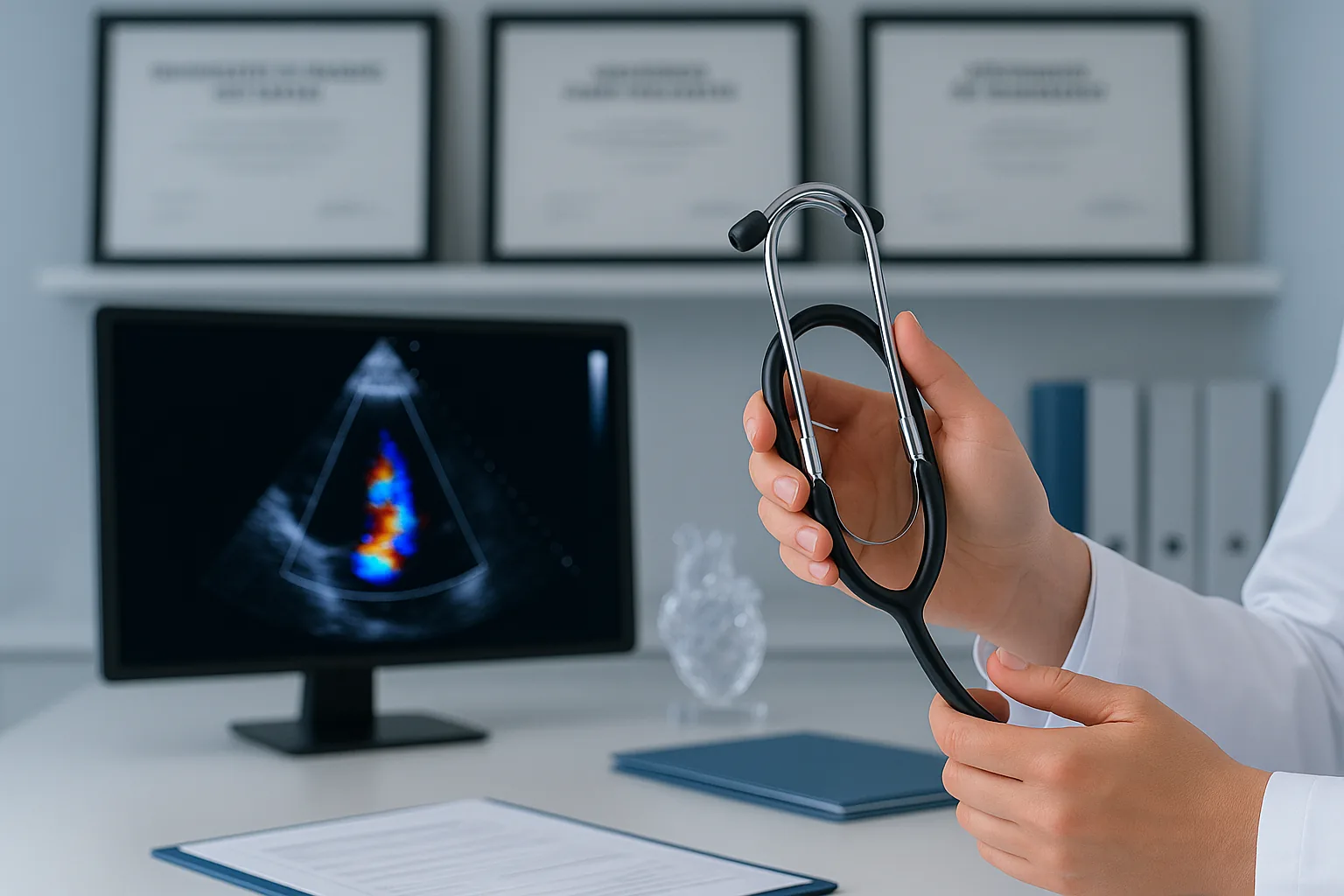
A cardiologist practising at the Complexe Médical Témara, Dr. Badria Agharbi brings expertise built on years of hospital practice in Morocco and Paris: ECG, echocardiography, Holter ECG and ABPM.
More about Dr Badria AgharbiA question about your heart health?
See Dr. Badria Agharbi, cardiologist in Témara, for a personalised assessment.